
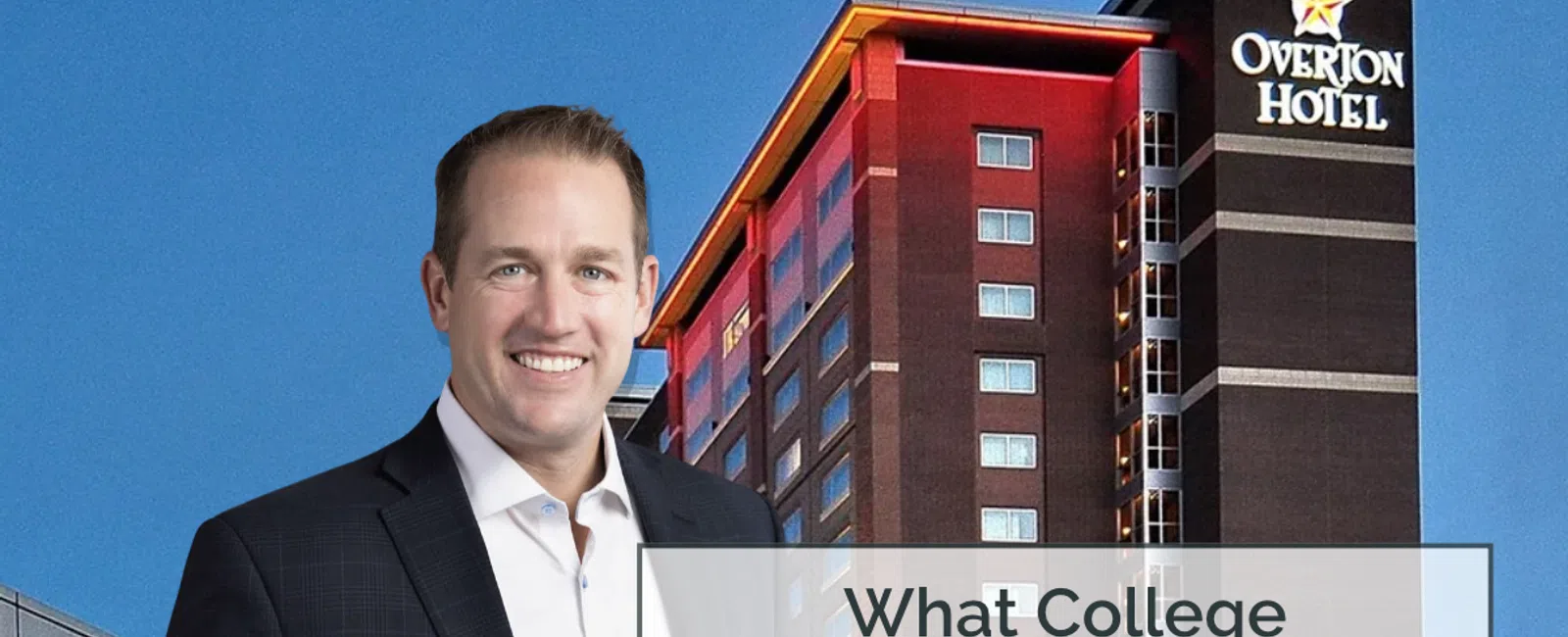
What College Applications Can Tell Us
About the Future of Hotel Demand
By Michael "Woody" Woodward, EVP and
Chief Growth Officer
Hotel owners
and developers spend considerable time studying where people are traveling
today. We analyze population growth, corporate relocations, employment trends
and other indicators to determine where hotel demand is headed.
One of the
most interesting clues about future markets may be sitting in university
admissions offices.
Across the
Southeast, colleges and universities are attracting high levels of interest
from prospective students. While the application numbers are primarily an
education story, they also point to potential shifts in hotel demand.
Today's
college applicants could be telling us something important about where the next
generation of workers, businesses and travelers will be concentrated.
The
Southeast Is Making the Short List
Consider the
recent application figures from several prominent Southeastern universities:
- University of Tennessee,
Knoxville: More
than 74,000 applications for fall 2026, with enrollment exceeding 41,000
students for the first time.
- Florida State University: More than 96,000 first-year
applications for fall 2026, a 12% increase over the previous cycle.
- University of South Carolina: More than 60,000 freshman and
transfer applications for fall 2025, a 13% year-over-year increase and a
university record.
What's
particularly interesting is where that interest is coming from. At Tennessee,
completed out-of-state freshman applications increased 15.4% for fall 2026,
compared with just 3.7% growth in in-state applications.
Of course,
applications aren't the same as enrollment, and students today apply to more
schools than in previous years. Nevertheless, the growing interest from
outside these states suggests that Southeastern universities are successfully
attracting young people willing to consider relocating to the region.
That's a
signal we are watching.
From
College Town to Career Destination
When
students choose a university, they're also choosing a place to spend several
formative years. They're developing relationships, building professional
networks, securing internships and getting to know the local economy.
Some will
return home after graduation. Others will move elsewhere. But a meaningful
share may begin their careers in the region where they attended college.
At the
University of Tennessee, for example, nearly 60% of 2023 graduates chose to
remain in the state to begin their careers. That figure suggests the
university's economic influence extends well beyond the years students spend on
campus.
When growing
university enrollment coincides with an expanding business community, the
potential benefits multiply. Employers gain access to educated workers,
graduates contribute to local spending and new businesses emerge. Over time,
these factors can support additional corporate travel, meetings and leisure
demand.
A
university market can evolve from a destination driven by the academic calendar
into a diversified economy with multiple sources of hotel demand.
We see an
opportunity to evaluate college markets through a longer-term lens, examining
both what universities generate today and how their graduates and institutional
investments may influence surrounding communities.
University
Markets Have Their Own Rules
We have
substantial experience operating hotels in university markets, including those
associated with the University of Kentucky, University of South Carolina,
University of Tennessee, Wake Forest University, Georgia Tech, Emory
University, UNC Wilmington and Texas Tech University.
We've
learned that these markets require a specialized operating strategy.
University
demand can be highly concentrated. Football weekends, graduations, move-in
periods and parents' weekends create opportunities for significant rate growth,
but those peaks must be balanced against softer periods.
Successful
operators understand university calendars, anticipate compression periods and
develop business beyond major campus events. Equally important are
relationships with universities, athletic departments, individual colleges,
donors, university-affiliated hospitals and other organizations that influence
travel. The goal is to make the hotel an integral part of the university
community rather than simply a place to stay near campus.
Putting
University-Market Expertise to Work
Our
experience at the Overton Hotel & Conference Center in Lubbock, Texas,
demonstrates the value of that approach.
We assumed
management of the 303-room property in August 2025, with a mandate to improve
revenue, profitability and leadership stability.
During our
first seven months of management, the property achieved:
- $452,000 in additional total
revenue, a 5.2%
increase
- 3 .4% RevPAR growth
- $1.41 million in GOP improvement, an 83.2% increase
- 312% GOP flow-through
The Overton
serves as the official hotel of Texas Tech University, creating opportunities
for co-branding, athletic event experiences and business from faculty, families
and university organizations.
We're
strengthening those connections through enhanced programming, food and beverage
offerings and partnerships with local businesses. University-market performance
requires an operator who understands how to convert institutional relationships
and seasonal demand into sustained financial results.
What
Hotel Investors Should Watch Next
Here are the
questions we are asking:
· Are applications and enrollment
increasing consistently, particularly among out-of-state students?
· Is the university investing in
academic programs, research facilities and campus infrastructure?
· Are graduates finding employment locally
or in the closest major metro area?
· Is the surrounding economy developing
industries that can retain those graduates?
· What do the market's existing hotel
demand, competitive supply and development pipeline look like?
A record
application year doesn't justify a hotel investment by itself. But when
combined with sustained university growth, favorable employment trends and a
healthy supply-demand balance, it can strengthen the investment case.
We expect
university markets to remain an important component of our growth strategy. The
students applying to universities today may be the professionals,
entrepreneurs, residents and business travelers shaping these communities in
the years ahead. For hotel investors looking to identify the next
generation of growth markets, that's a connection worth studying.